
Inherited Violence
The Hound of the BaskervillesThis thematic thread connects the legendary violence of Hugo, the inherited atmosphere of the estate, and Stapleton’s deliberate revival of the family’s darkest story.
increasing Bearing strength in each event
 decreasing
Bearing strength in each eventdecreasingHugo’s Cruelty

Hugo’s Cruelty
Power abused
Hugo kidnaps a young woman and turns his household’s hounds against her after she escapes.
Violence becomes legend
His death beside hers gives later generations a story of punishment and supernatural vengeance.
The family’s past begins in human cruelty.
A House Built on Memory
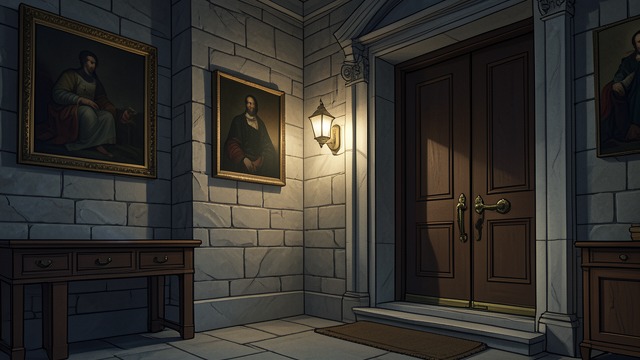
A House Built on Memory
The ancestors watch
Portraits, old stone, and dark interiors make the family past seem present in the Hall.
Henry’s response
He imagines restoring the estate rather than fleeing its oppressive history.
Inheritance offers both belonging and burden.
The Legend Reused

The Legend Reused
An old fear repurposed
Stapleton coats a real dog with phosphorus to imitate the family’s blazing demon.
Deliberate psychological violence
The inherited story makes the animal more terrifying to Charles than an ordinary attack could be.
The past becomes a tool in a modern crime.
A Repeated Chase
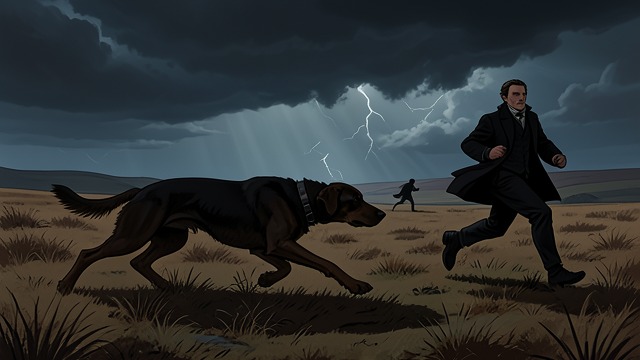
A Repeated Chase
History appears to return
The hound pursues another Baskerville across the moor, repeating the pattern associated with Hugo.
The cycle is interrupted
Holmes’s intervention kills the dog before Henry can share Charles’s fate.
The inherited script proves powerful but not inevitable.
The Past Explained

The Past Explained
Kinship clarified
Holmes identifies Stapleton as a descendant of Rodger Baskerville and connects him to Hugo’s portrait.
Inheritance, not curse
The apparent return of family evil is a criminal claimant exploiting ancestry and fear.
The novel replaces supernatural heredity with human choice.
During the Great Rebellion
Henry’s first evening at Baskerville Hall
During Stapleton’s preparation of the hound
During the attack on Henry
During Holmes’s retrospective in London
